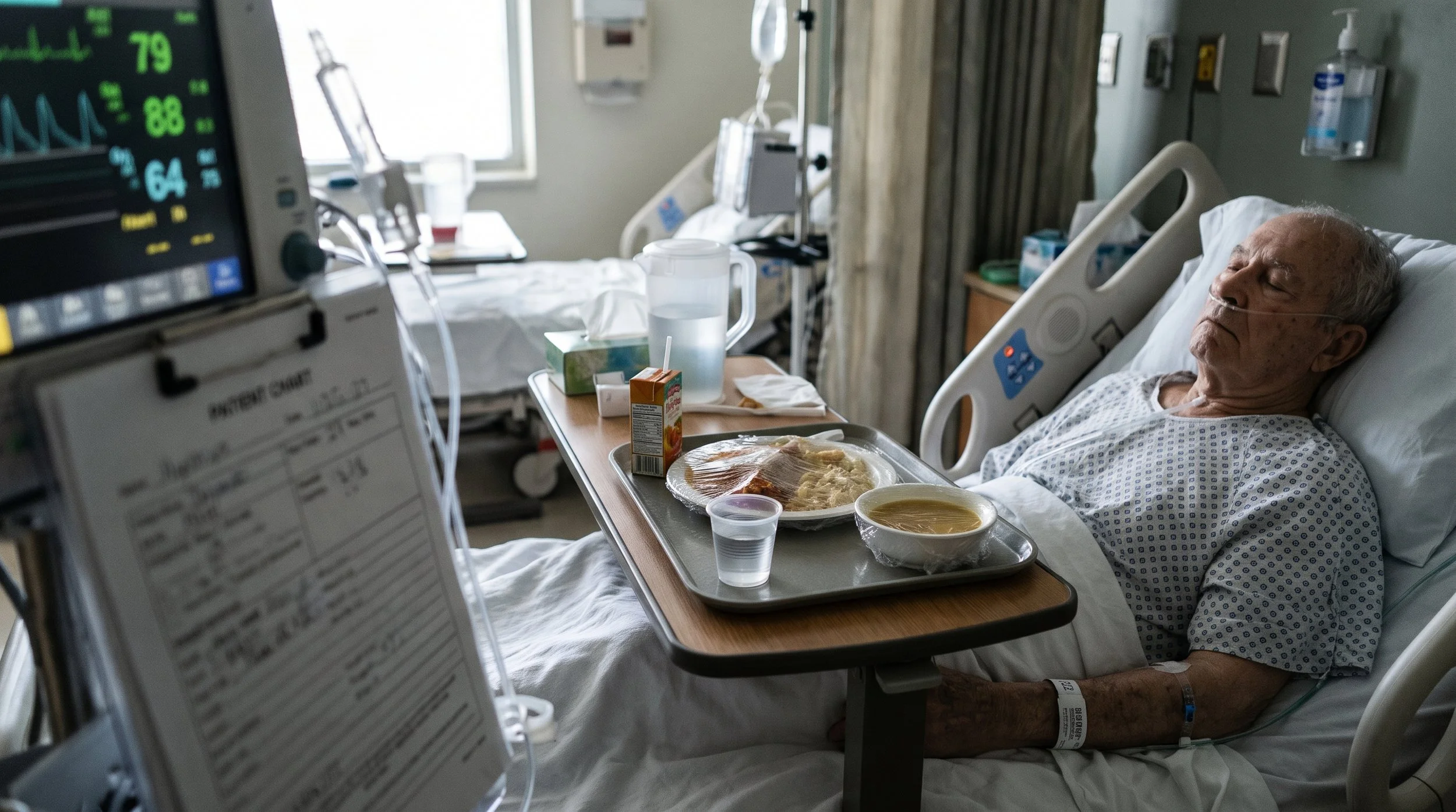
A 78-year-old patient is admitted to the hospital with severe sepsis. The clinical team moves fast: blood cultures are drawn, IV broad-spectrum antibiotics are hung, oxygen is administered and eventually titrated, and blood pressure stabilizes.
By day four, the infection is officially cleared. The chart says he is "medically stable."
Then, lunch arrives. Since he is improving, nobody thinks to screen or assess his swallowing…
A week later, he is readmitted with aspiration pneumonia
What went wrong? The medical team successfully treated the systemic infection, but they missed the dysphagia.
Sepsis is not just an ICU problem
When speech pathologists and other practitioners think about critical illness and dysphagia, they picture the Intensive Care Unit: Critical illness myopathy, intubation trauma, mechanical ventilation, sedation, and days of disuse atrophy.
The data tells a very different story.
A 2026 study published in Dysphagia by Sasegbon and colleagues found that the vast majority of infection and sepsis-related swallowing collapses occur outside the ICU, on regular medical and surgical floors.
Sepsis doesn't just make patients tired; it increases their odds of swallowing breakdown by 74% (OR 1.74). To put that in perspective, acute sepsis independently rivals the risk profile of delirium (OR 1.60), and while dementia still carries an even heavier odds ratio (OR 2.43), systemic infection can deliver a shock to an older adult's baseline dysphagia.
Even more alarming… Between 60% and 84% of post-septic dysphagia patients never return to their baseline swallow before discharge. Put it this way…
Consider a typical patient recovering from severe sepsis. Beating the infection is only half the battle: when they develop difficulty swallowing, the odds are stacked overwhelmingly against them—they have up to an 8-in-10 chance of leaving the hospital permanently impaired.
Yet, while their infection was treated with aggressive, around-the-clock care, their dysphagia completely falls below the radar, and the patient is discharged without ever receiving structured rehabilitation. Yet, almost none of them receive structured rehabilitation while in the hospital.
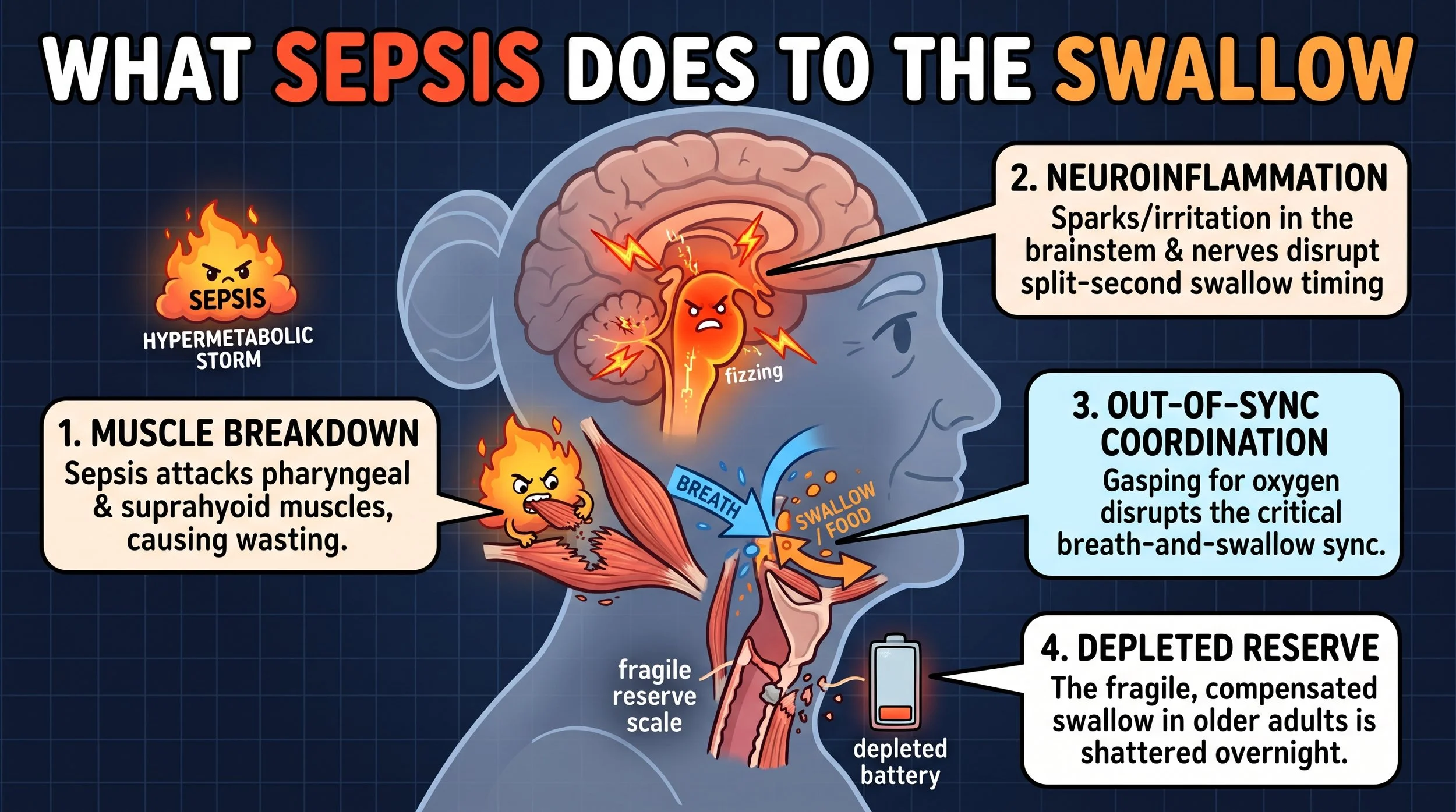
What Sepsis Does to the Swallow
Researchers and deglutologists suspect the underlying breakdown is multifactorial:
Muscle breakdown: Sepsis can trigger a hypermetabolic storm. In desperate need of fuel, the body begins consuming its own skeletal muscle. When that breakdown reaches the pharynx, muscles like the suprahyoid muscles, which are responsible for protecting the airway, are not immune.
Neuroinflammation: For high-acuity patients, sepsis attacks central sensorimotor pathways in the brainstem, while peripheral nerves suffer from critical illness polyneuropathy. The brain simply stops orchestrating the split-second timing required to close the airway.
Respiratory-Swallow Coordination: A healthy swallow requires a coordinated pause in breathing (swallow apnea). In a septic patient gasping for metabolic oxygen, breathing and swallowing become out of sync.
Reserve: In aging adults, minor baseline changes (presbyphagia) remain compensated during normal health, but sepsis disrupts that fragile reserve, turning a functional older swallow into an acute aspiration risk overnight.
Who is most at risk?
While any acute infection can destabilize swallowing, four patient profiles face a particularly high level of vulnerability:
Parkinson’s Disease (Nearly 4x Risk): Infection causes an immediate, catastrophic motor collapse in individuals with PD, even if they swallowed normally prior to admission.
Dementia (OR 2.43): Sepsis magnifies cognitive deficits, disrupting mealtime preparation and swallow initiation.
Infective Pneumonia (9.3% dysphagia rate): Lung inflammation and respiratory fatigue create the highest overall risk of dysphagia.
Delirium: In severe sepsis, delirium isn't a rare complication—it strikes 2 out of every 5 patients. Even after accounting for age and health conditions, patients who suffer delirium are more than one-and-a-half times as likely to develop difficulty swallowing. The worst part? Long after their mental fog lifts and clarity returns, they may continue to present with dysphagia.
What Can We Do?
Missing a swallowing problem after sepsis is often treated like a routine paperwork oversight. But it is actually a medical landmine. Failing to catch dysphagia isn't just a small administrative slip—it is one of the single most reliable signals that a patient will be trapped in a hospital bed, bounce straight back to the ER after discharge, or never make it out of the hospital alive.
Here is how SLPs can step in as trusted guides to protect vulnerable patients:
Screen: Flag every patient admitted with sepsis, pneumonia, advanced age, or neurodegenerative disease for an SLP swallowing screen within 24–48 hours.
Test: Bedside water tests miss silent aspiration in catabolic patients. Use instrumental swallowing evaluations (FEES or VFSS) to visualize anatomy and physiology to inform the plan of care.
Rehab: Stop defaulting to thickened liquids alone. Prescribe targeted lingual resistance, EMST, and pharyngeal clearance exercises as soon as the patient can cognitively participate.
Track: Because over half of these patients do not recover by discharge, infection recovery does NOT equal swallow recovery.
Document: Take note of the patient’s status, as well as their signs and symptoms, plan in discharge summaries, and recommend a follow-up instrumental reassessment when clinically indicated. Don’t let anyone fall through the cracks!
Conclusion
When a patient beats sepsis, we have won only half the battle. If we save their life from infection only to discharge them into dehydration, silent aspiration, or aspiration pneumonia, the system has failed.
True recovery means protecting them, rebuilding their muscle, and restoring their ability to safely eat and drink now and even after discharge.